
5 Signs You Grew Up Walking on Eggshells
Have you ever found yourself constantly scanning other people's moods, overthinking conversations, or feeling responsible for keeping the peace?
Many people who grew up in emotionally unpredictable environments learned to pay close attention to what was happening around them. These adaptations often helped them navigate difficult situations and feel safer. However, those same patterns can continue into adulthood long after the original circumstances have changed.
Here are some common signs that you may have learned to walk on eggshells growing up.
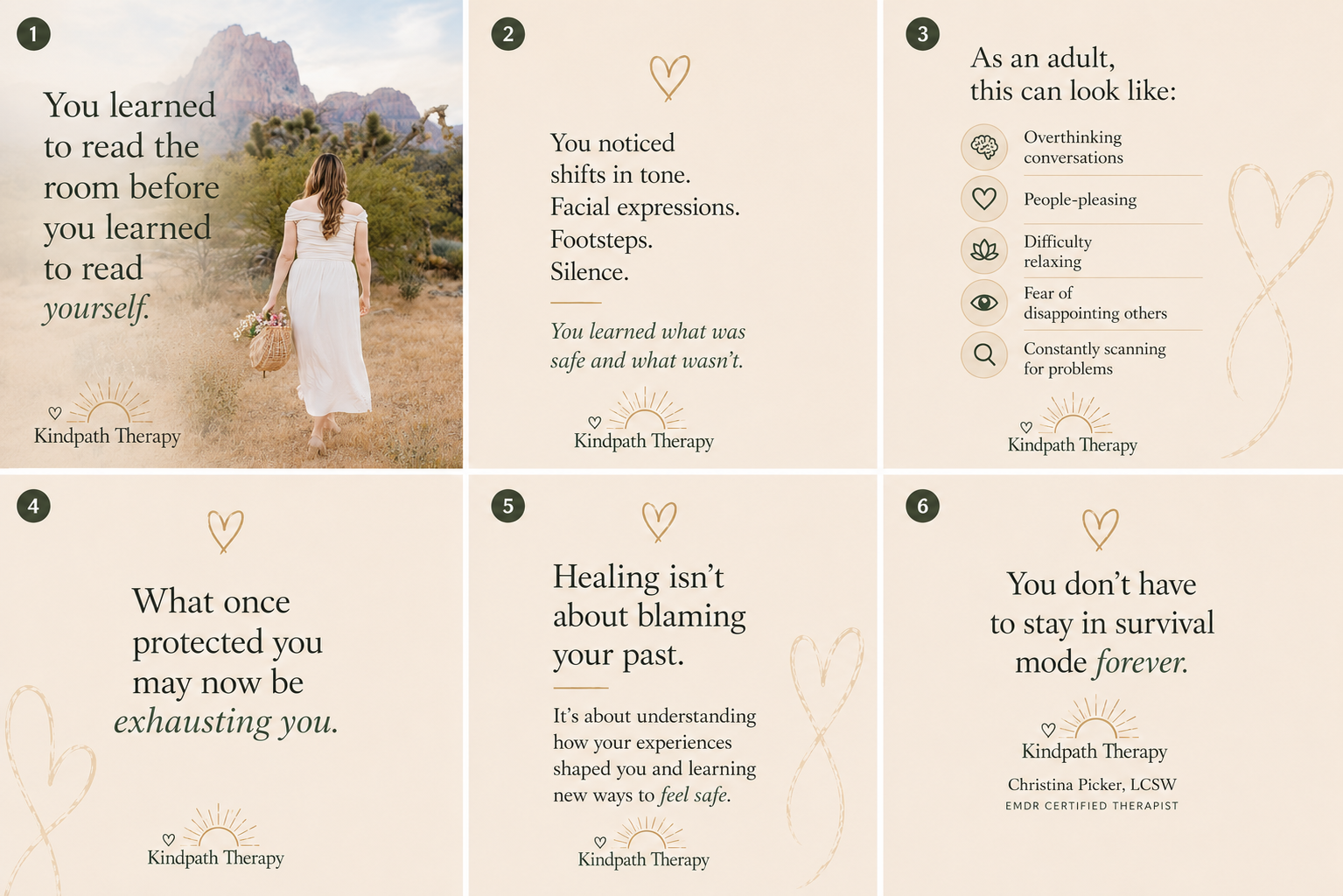
You Learned to Read the Room Before You Learned to Read Yourself
Many people who grew up in emotionally unpredictable environments became experts at paying attention to what was happening around them. They learned to notice changes in tone, facial expressions, body language, or mood because doing so helped them anticipate what might happen next. These skills often developed as ways to feel safer, avoid conflict, or maintain connection with important people in their lives.
Over time, this focus on others can come at a cost. When so much energy is spent monitoring the needs, emotions, and reactions of those around you, there may be little space left to notice your own thoughts, feelings, and needs. As a result, many adults find themselves asking questions such as, “What do I want?” or “How do I feel?” and realizing they are not entirely sure of the answer.
This pattern is not a personal flaw. It is often an adaptation that made sense in a particular environment. The challenge is that what once served a protective purpose can become exhausting in adulthood, leaving people disconnected from themselves while remaining highly attuned to everyone else. Healing often begins with gently turning some of that attention inward and learning that your own emotions, needs, and experiences matter too.
You Noticed Changes Others Miss
Perhaps you can tell when someone is upset before they say a word. You notice a slight change in their tone of voice, a different facial expression, a delayed text message, or an unusual silence. You may find yourself wondering if you've done something wrong or trying to figure out how to make things better.
For many people, this level of awareness developed for a reason. If emotions in your environment felt unpredictable growing up, paying close attention to subtle cues may have helped you anticipate conflict, avoid criticism, or prepare for emotional reactions from others. Your nervous system learned that being observant was important.
As an adult, this can show up as constantly scanning for signs that something is wrong. You may replay conversations in your mind, analyze the meaning behind someone's words, or feel unsettled when another person's mood shifts. While this awareness can make you empathetic and perceptive, it can also be exhausting.
The challenge is that your nervous system may continue responding as though every change in someone's mood requires your attention. A friend being quiet, a partner having a stressful day, or a delayed response to a message can quickly trigger worry, self-doubt, or a sense of responsibility.
Over time, this can create a pattern where you become highly attuned to everyone else's emotional world while losing touch with your own. Healing often involves learning that another person's emotions do not automatically mean you are responsible for them. It becomes possible to notice what is happening around you without carrying the weight of managing it.
Common Adult Signs
Overthinking Conversations
People-pleasing
Difficulty relaxing
Fear of disappointing others
Hypervigilance
Difficulty identifying your own needs
What Once Protected You May Now Be Exhausting You
Many of the patterns we struggle with as adults did not begin as problems. In fact, they often began as solutions.
If you learned to stay quiet to avoid conflict, that strategy may have helped you navigate difficult situations. If you became highly aware of other people's emotions, that awareness may have helped you anticipate reactions and feel more prepared. If you learned to put other people's needs before your own, it may have helped you maintain important relationships or create a sense of stability in an unpredictable environment.
These responses were not signs of weakness. They were adaptations.
The challenge is that our nervous systems do not always recognize when circumstances have changed. Behaviors that once helped us feel safe can continue long after the original threat is gone. What once served a protective purpose can begin to create new difficulties, leaving us feeling anxious, overwhelmed, disconnected, or responsible for everyone around us.
Many people become frustrated with themselves when they notice these patterns. They wonder why they overthink, struggle to relax, or have difficulty setting boundaries. Yet self-criticism often overlooks an important truth: these behaviors developed for a reason.
Rather than asking, "What's wrong with me?" it can be helpful to ask, "What was this pattern trying to do for me?"
Approaching ourselves with curiosity instead of judgment creates space for healing. When we understand that our responses were attempts to protect us, we can begin to honor the role they played while also exploring whether they are still serving us today.
Healing is not about getting rid of parts of ourselves. It is about recognizing which strategies belong to the past and developing new ways of feeling safe, connected, and grounded in the present.
Healing Don’t Require Blaming the Past
Understanding where our patterns come from is not about assigning blame. It is about gaining insight.
Many of the ways we learned to cope made sense given our experiences. Recognizing those patterns allows us to approach ourselves with greater compassion and make intentional choices about how we want to move forward.
Healing is not about staying stuck in the past. It is about understanding how the past may still be influencing the present and learning new ways to respond that better support the life you want to create.
Final thoughts
If you recognize yourself in these patterns, you're not broken. Many of these responses developed for understandable reasons. Healing often begins with awareness, self-compassion, and learning that safety is possible without constantly monitoring the world around you. You deserve the same care, attention, and understanding that you've spent so much time offering to others.
Ready to begin your healing journey?
I provide online therapy for adults experiencing anxiety, trauma, grief, life transitions, and the lasting effects of difficult childhood experiences.
Schedule a free 15-minute consultation to learn more.
👉 Visit kindpaththerapy.net to schedule.